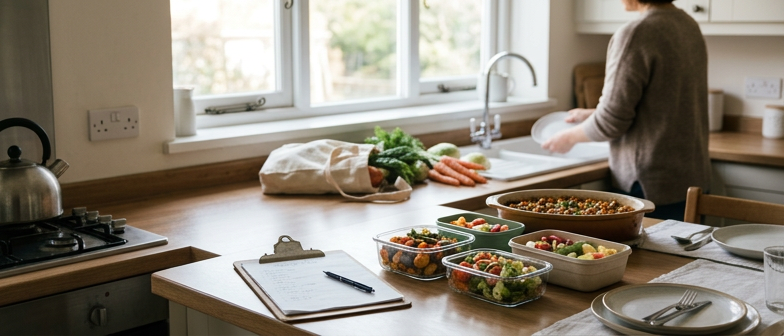
Let the Season Lead: A Flexible Weekly Plan
A relaxed weekly plan starts with what looks good where you shop, not with a long list of fixed recipes. Notice which fruits and vegetables are stacked high and look vibrant. Tender greens, juicy tomatoes, and lighter vegetables tend to suit big salads and quick pastas, while sturdier options work well for sheet-pan meals and hearty grain bowls.
Instead of planning seven specific dinners, choose two or three seasonal ingredients as your main “heroes” for the week. For instance, you might pick tomatoes, zucchini, and fresh herbs. From that starting point, you can build several ideas: pasta with sautéed zucchini, a chopped salad with tomatoes and herbs, a tray of roasted vegetables for grain bowls, and a simple blended soup. The same items appear in different dishes, which supports variety without a long list.
Once you have your seasonal focus, sketch a loose grid. Include a couple of fast weeknight meals, one slower “project” dish when you have more time, and a few items that can be mixed and matched. Neutral building blocks such as cooked grains, roasted vegetables, and washed salad greens fit into many combinations and make it easier to assemble a plate when the day is busy.
Leaving intentional gaps also reduces pressure. Planning fewer dinners and counting on leftovers, freezer portions, or an easy snack-style plate on other nights keeps expectations realistic. If something unexpected comes up or a new ingredient catches your eye later in the week, there is still room to adjust instead of feeling locked into a strict schedule.
Sample Weekly Grid Using Seasonal Focus
| Day / Slot | Main format | Seasonal focus use | Prep needed in advance |
|---|---|---|---|
| Quick weeknight 1 | Pasta or noodles | Sautéed vegetables, fresh herbs | Cooked grains or pasta, washed greens |
| Quick weeknight 2 | Big salad or wrap | Raw and roasted vegetables, leafy greens | Roasted tray of mixed vegetables |
| Slower “project” | Baked or layered dish | Same vegetables in a casserole or bake | Extra batch of sauce or grains |
| Flexible night | Grain bowl or soup | Leftover vegetables and protein pieces | None beyond earlier batch cooking |
Short, Practical Lists: Shopping with a Clear Focus
A shorter, more effective list starts with seasonal produce rather than a long string of recipe names. Think about what is usually abundant at this time: maybe tomatoes, zucchini, peppers, stone fruits, berries, or leafy greens. Narrow that down to three to five fruits and vegetables. Committing to just a few keeps your basket focused and helps those ingredients show up multiple times.
With your produce choices in mind, outline a handful of meal “formats” instead of exact recipes: perhaps pasta, a large salad, a sheet-pan dinner, and a grain bowl. Under each format, plug in one or two of your chosen fruits or vegetables plus a protein that fits your household’s preferences. This simple pattern builds several meals from a small core set of ingredients.
When it is time to write the list, group items by how you actually move through the store: produce, proteins, pantry dry goods, dairy or alternatives, and extras such as condiments. Under produce, stick to the seasonal picks you already chose. A useful rule is that an item should appear in at least two meal ideas before it earns a place on the list.
Proteins can stay simple and flexible. Choose two or three that you can cook in a basic way and reuse: perhaps a tray of baked tofu or poultry, a pot of beans, or another option that your household enjoys. Once cooked, these can move from tacos to salads to pasta without extra effort.
Keeping a basic list on your phone that you adjust as seasonal items change can make shopping smoother. The structure stays the same while the seasonal “stars” rotate, so you spend less time wandering aisles and more time actually using what you bring home.
Example of a Focused Shopping Template
| Category | Core picks for the week | How they appear in meals |
|---|---|---|
| Produce | A small set of seasonal vegetables | Repeated in pasta, salads, bowls, and soups |
| Proteins | Two or three versatile options | Used across tacos, wraps, pasta, and grain dishes |
| Pantry | Grains, beans, basic sauces | Form the base for both lunches and dinners |
| Extras | Herbs, simple toppings, dressings | Add variety so similar ingredients feel different |
Cook Once, Use Many Times: Simple Prep Sessions
Batch cooking works well when you focus on a few flexible bases instead of complete dishes. A large pan of roasted vegetables that suit the current season, a pot of grains, and one high-protein component can support several meals. For example, a grain base can be served as a warm side, used in a salad, or turned into a skillet dish with added vegetables and sauce.
Seasoning lightly during the main prep gives you options later. A little oil, salt, pepper, and maybe a basic herb mix keeps flavors friendly to many dishes. As the week goes on, you can change things up with quick additions such as a vinaigrette, a spoonful of herb paste, or a creamy sauce. This helps each plate feel distinct even if the building blocks stay the same.
Right after cooking, portion components into containers. For midday meals, individual portions make it easy to pack a box or grab something on the way out the door. Add raw fruits or crisp vegetables closer to eating time so they stay fresh and keep their texture. For evening meals, leaving elements unassembled means you can combine them differently depending on what sounds appealing that night.
Wraps, burritos, and stuffed vegetables are all useful ways to turn leftover grains, vegetables, and proteins into new shapes. A mixture that began as a bowl can become a handheld option the next day with just a different wrapper or topping. Writing a short note for yourself about which base item will turn into which dish can simplify choices on busy days.
Keep Meals Interesting: Reusing Ingredients Without Repetition
Mix-and-match planning works best when you think in components rather than fixed recipes. Simple, plainly seasoned vegetables, grains, and proteins can become several types of plates while still feeling fresh. Roasted seasonal vegetables might top a grain bowl one evening and then slide into a soup or pasta later in the week.
Keeping flavors neutral at first lets you shift the “theme” quickly. One day, a citrusy dressing and fresh herbs can create a bright taste. On another day, a creamy yogurt-based sauce or a mild spicy drizzle can give the same base a very different character. Crunchy toppings—such as seeds, nuts, or crushed crackers—add variety in texture without adding a lot of extra prep time.
Batch-cooked items like simple soups, stews, or tomato-based sauces work especially well for this approach. A pot of soup can be eaten on its own, poured over grains, or used as the base for a baked dish with added vegetables and protein. The key is to think about at least two uses before cooking, so you already know how leftovers will fit into later meals.
Seasonal shifts keep things interesting too. In cooler times, roasted root vegetables, beans, and hearty greens lend themselves to grain bowls, baked dishes, and warm soups. In warmer times, lightly sautéed vegetables, crisp salad greens, and cooled grains create refreshing salads and quick stir-fries.
By keeping a small set of well-prepped basics on hand and changing how they are combined, you can support regular homemade eating without spending every evening in the kitchen. Instead of starting from zero each night, you are simply rearranging familiar pieces into new, satisfying combinations.
Q&A
-
How can Seasonal Meal Prep Ideas help reduce food waste and decision fatigue during busy weeks?
Aligning meal prep with the seasons means you buy what is freshest, cheapest, and most flavorful, so it actually gets eaten instead of sitting in the fridge. Planning a few repeat “formats” that change with the seasons lowers daily decisions, yet still keeps meals varied and enjoyable for the whole household. -
What are practical Healthy Lunch Box Planning strategies that keep meals safe and appealing until midday?
Build lunch boxes around three parts: a fiber‑rich base, colorful produce, and a stable protein. Use insulated containers and ice packs for dairy, eggs, and meat. Pack juicy items separately, keep dressings in small leak‑proof pots, and choose whole foods over ultra‑processed snacks to maintain stable energy and focus. -
Which Simple Grocery List Basics keep shopping fast while supporting Budget Friendly Meal Choices?
Start with a short list of versatile staples: two grains, two proteins, and a few in‑season vegetables and fruits used across several meals. Buy store brands for pantry items, avoid single‑use convenience foods, and track “high‑value” items you always finish, so every purchase pulls its weight in multiple dishes. -
What Fresh Produce Storage Tips help ingredients last long enough for a full week of home cooking?
Store leafy greens washed, spun dry, and wrapped in towels inside ventilated boxes. Keep ethylene‑producing fruits like apples away from tender produce. Hardier vegetables belong in the crisper, while tomatoes and stone fruit ripen on the counter. Label containers with dates so you use delicate items earlier in the week. -
How can Home Cooking Time Saving and Family Dinner Routine Ideas work together on a tight budget?
Choose one or two weekly prep windows to cook big batches of neutral grains and proteins, then schedule simple themed nights like “soup and salad” or “bowl night.” Repeating formats shortens planning time, makes use of leftovers, and lets you rely on inexpensive basics while still feeling flexible and relaxed.