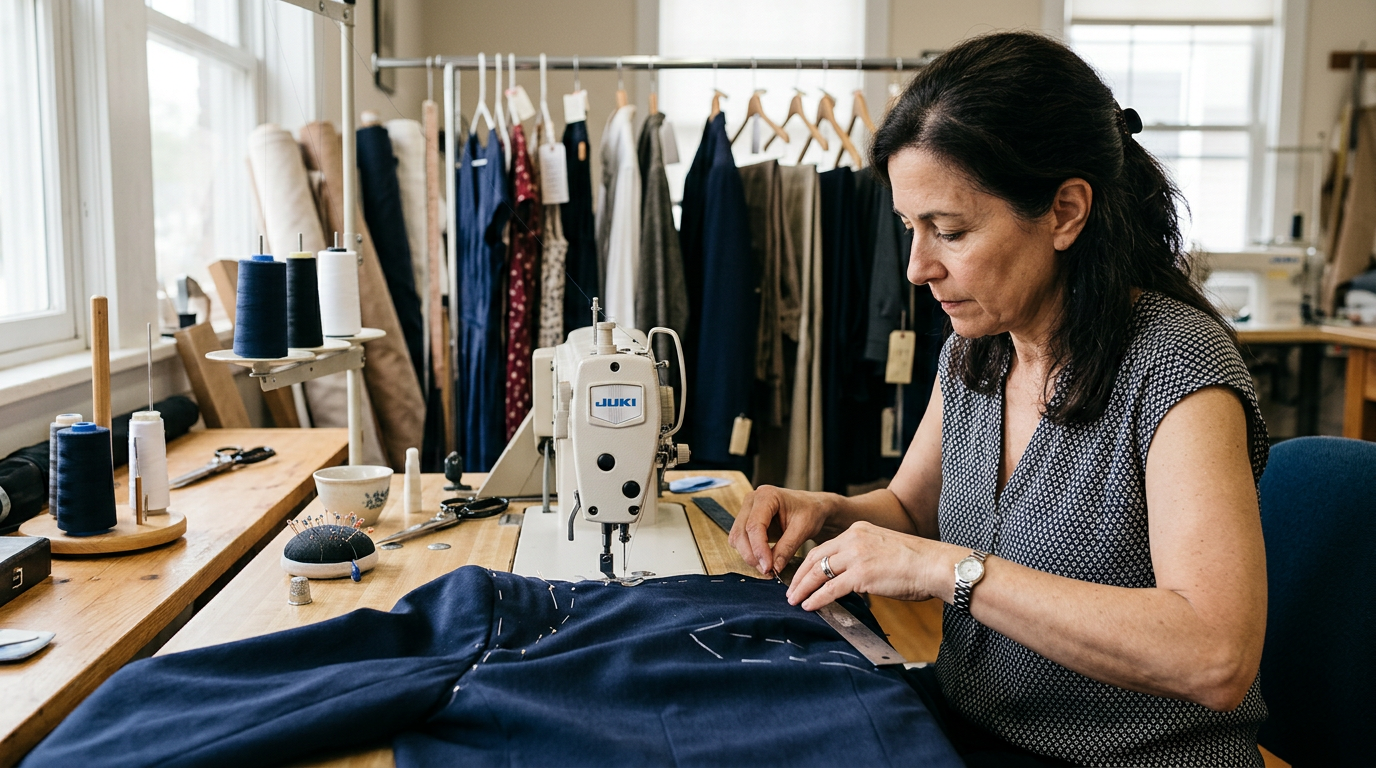
What Clothing Alterations Can and Cannot Do
Clothing alterations work best when a garment already fits fairly well in the shoulders, body length, and overall proportions. During a garment fitting appointment, a tailor studies how the fabric hangs, checks the grain, and examines seam allowances to see how much fabric can be let out or taken in. Typical adjustments include narrowing or releasing side seams, changing hems, and refining the waist or seat so the piece follows the body without strain. These changes can significantly improve comfort and appearance, but they depend on the way the item was originally cut and sewn, and on the strength of the fabric and stitching.
Even with careful measurements and planning, there are limits. If a jacket or dress is several sizes too small or too large, there is usually not enough usable cloth in the seams to reach a balanced fit, and shifting seams too far can distort the design or weaken the structure. Linings, decorative details, and complex internal construction can further restrict what is possible. When major work would require recutting shoulders, drastically changing the silhouette, or rebuilding multiple panels, the cost and structural impact may outweigh the benefits. Knowing that seam allowances and original construction set these boundaries helps manage expectations about when to alter a garment and when to look for a different size or style instead.
| Common Fit Issue | Typical Alteration Difficulty | Dependence on Seam Allowances | Expectation Guide |
|---|---|---|---|
| Minor waist or seat refinement | Easy | Low to moderate | Often worthwhile if base size is close |
| Hemming pants or skirts | Easy | Low | Good option when overall fit already works |
| Letting out tight areas | Moderate | High | Check inside seams before assuming extra room |
| Reshaping side seams for balance | Moderate | Moderate | Helps fine‑tune shape, not change full size range |
| Major size change up or down | Difficult | Very high | Often better to choose a different garment size |
| Altering heavily structured pieces | Difficult | High | Costs and risks can outweigh fit improvements |
Key Measurements and Fitting Appointments
Accurate tailoring measurements are the basis of effective clothing alterations because they convert how a garment sits on the body into numbers that can be adjusted. A fitter usually records body measurements such as waist, hip, chest, seat, inseam, and sleeve length, together with garment dimensions like finished back length or shoulder width. These are compared with the wearer’s preferred silhouette and with available seam allowances, which limit how much fabric can be taken in or let out without weakening the construction. Even a difference of half an inch can change how trousers hang or how a jacket closes, so careful measuring and notes are important.
During a garment fitting appointment, the wearer typically tries on the item in a natural posture, with shoes and undergarments similar to those planned for regular use. The fitter pins or marks areas that need changes, such as trouser hemming, sleeve length on shirts or jackets, or the waistband on skirts and pants. They may ask the wearer to sit, walk, or lift their arms to see how the fabric behaves in motion and where pulling, gaping, or twisting appears. The discussion often covers how the garment will be worn, how much ease feels comfortable, and any limits caused by delicate fabric, heavy embellishment, or narrow seam allowances.
Because tailoring measurements still depend on human judgment, they are not perfectly precise, and results can vary among professionals or between visits. Small shifts in posture, changes in weight, or different shoes can alter inseam or hem requirements, and a tape measure only approximates a three dimensional shape on a moving body. More complex work, such as reshaping a jacket or adjusting both waist and seat, may therefore need more than one fitting. Clear communication about expectations, known fit problems, and acceptable compromises helps the final garment feel comfortable while staying within the structural limits of the original design.
Understanding Tailoring Measurements
Tailoring measurements translate your three-dimensional body shape into numbers a tailor can apply to fabric. Typical points include neck, shoulders, chest or bust, waist, hips, rise, inseam, outseam, and sleeve length, plus garment details such as jacket or skirt length. For alterations, the tailor may also measure the existing piece to compare its current dimensions with your body and the preferred fit, and to see how much can be taken in or let out without overstressing seams or altering the design.
To prepare for a garment fitting appointment, wear the undergarments and shoes you plan to use with the clothing and bring the items that need altering. Stand naturally without changing your posture, and explain your preferences, such as trouser hem break or waistband height. Tailors often use pins and chalk as well as the tape measure and may point out limits caused by fabric, lining, pockets, or vents, along with expected turnaround and whether additional fittings are likely.
Common Lower-Body Adjustments
Lower-body alterations often start with pant or skirt length, since the hem affects how a garment works with different shoes. Trouser hemming usually involves setting the desired break over the shoe while the wearer stands in typical footwear, then shortening or occasionally lengthening the leg and pressing a clean plain or cuffed finish. Delicate fabrics, heavy embellishment, or technical materials with specialized edge finishes can restrict how a hem is altered or make it harder to recreate the original look after changing the length.
Adjusting the waistband aims to improve comfort and security at the waist without distorting the garment’s shape. Letting out the waist usually means opening seams, releasing extra fabric, and reattaching the waistband, while taking it in removes width along those same lines. The construction details, such as darts, a center back seam, or a separate waistband, determine how much change is practical. Very large size shifts can move pockets or alter the seat and hip area enough that replacement, rather than major alteration, may be the more effective option.
Seam allowances set clear limits on how far hems and waistbands can be changed. This allowance is the strip of fabric between the stitching line and the raw edge; more width allows more room to let a garment out. Many ready-made pants use narrow allowances to save material, so only modest size changes are safe before seams weaken or show. During a garment fitting appointment, an alterations specialist typically checks inside the waistband and along leg seams, then explains which requests are realistic and which might strain the fabric or shorten the garment’s lifespan.
Trouser Hemming and Break
Trouser hemming is a clothing alteration that shortens or occasionally lengthens the leg at the bottom edge, then finishes it with a neat fold and stitch. During fitting, the hem is usually pinned while you stand in your regular shoes so the length suits your heel height. Fabric type, the available seam allowance, and whether the hem is sewn with a blind stitch or a visible line of stitching all affect how subtle the change looks and how much length can safely be adjusted. The term trouser break describes how much the front of the pant leg rests or creases on the top of the shoe, from a deeper fold for a traditional look to a light or no break for a sharper, more modern line that reflects personal preference and body proportion.
Adjusting Sleeves and Upper-Body Fit
Sleeve length adjustments are a frequent clothing alteration for jackets, shirts, and dresses because cuff position strongly affects how neat a garment looks. During a fitting, the wearer stands with arms relaxed so the specialist can compare the sleeve end to the wrist bone or hand. For tailored jackets, the new length is often set by how much shirt cuff should show, while casual pieces are shortened mainly to prevent fabric covering the hands. The alteration options depend on sleeve construction, including plackets, cuffs, or vents that may need to be repositioned. The original pattern and the fabric hidden in the hem limit how far sleeves can be shortened or lengthened, so not every garment can reach a chosen length.
Upper-body fit changes, such as refining the width of a shirt body or the back of a dress, depend heavily on clothing seam allowances, the extra fabric inside each seam. Generous allowances and easy access give more scope to let out the chest, back, or upper arm, while very narrow margins restrict how much width can be added. In many ready-made garments, side seams and the center back are used for basic torso adjustments; more involved work on shoulders, armholes, or bust shaping can be time-consuming and may disturb the garment’s balance and design. During a garment fitting appointment, an alterations professional typically explains which tailoring measurements are feasible, the trade-offs involved, and whether the expected result is realistic without weakening the structure.
Q&A
-
What can clothing alterations change, and what are their limits?
They can adjust length, waist or seat fit, and side seams to improve comfort and shape. Limits come from the original cut, fabric strength, and seam allowances, so big size changes or moving shoulders much is usually not possible. -
How are tailoring measurements used in a fitting appointment?
The tailor compares body measurements like chest, waist, hips, inseam, and sleeves with the garment. Differences show where fabric can be taken in or let out within the available seam allowances. -
What matters when hemming trousers and setting the break?
Wear the shoes you plan to use so the hem can be pinned to the desired break. Fabric type, hem depth, and stitching affect how much length can change and how closely the new hem matches the original finish. -
How much can sleeves usually be shortened or lengthened?
Shortening is usually simpler. The spare fabric inside the cuff or hem, and details like buttons or vents, limit how far sleeves can move without throwing off the design. -
Why do seam allowances matter for waistband changes?
Seam allowances are extra fabric inside the seams. At the waist they define how much can be taken in or let out without weakening stitches or creating visible ridges, so they set the safe adjustment range.