Foods That Freeze Well (And How to Use Them)
Everyday ingredients that handle the cold
Some ingredients are natural champions in the freezer. Cooked beans and lentils, minced or shredded meats, chicken thighs, root vegetables, and firm greens stay robust in broths and sauces. Tomato and stock bases deepen in flavor, and spice‑rich mixtures become more rounded over time. Grated cheese, sliced bread, wraps, and cooked grains also freeze well and can turn a simple stew into a full meal in minutes.
Others need a gentler approach. Tender salad leaves and cucumber lose their crunch, so keep those fresh for serving day. Potatoes behave better when they are mashed, blended into soups, or well‑sauced in a bake. Sauces thickened with flour or starch may look a bit split after thawing, but usually come back together with a slow reheat and a quick stir. Thinking about texture first helps avoid that “tired leftovers” feeling.
Turning one base into several different dinners
A clever way to build variety without extra work is to cook neutral bases that can wear different “outfits.” A big batch of shredded chicken can turn into tacos with salsa, a creamy pasta dish, or a quick soup with vegetables and stock. A pot of rich tomato and meat sauce can land on spaghetti one night, fill baked potatoes another night, and be layered under cheese in a small oven dish on a third.
Seasonings and toppings do most of the transformation. Yoghurt, sour cream, grated cheese, herbs, crunchy seeds, hot sauce, or citrus wedges change the mood of a meal without touching the freezer stash. Planning bases plus optional finishers keeps prep day simple while making dinners feel less repetitive. Children often enjoy choosing their own toppings, which can help picky eaters feel more in control.
When to freeze full meals and when to freeze “building blocks”
Not everything has to go into the freezer as a complete dinner. Sometimes it’s more useful to freeze pieces. Cooked chickpeas, roasted vegetables, spiced ground meat, or plain tomato sauce can be portioned into small containers. On a night when you have twenty minutes and a bit of energy, you can combine them with fresh items to build a new meal fast.
Full, ready‑to‑bake dishes shine on the most exhausting days: lasagna in a small pan, a labelled pie, or a tray of prepared chicken and vegetables. Building‑block portions are ideal for more flexible evenings when you still want to avoid starting from scratch. A mix of both in the freezer turns it into a friendly toolbox instead of a rigid schedule.
Here’s a simple way to decide what to freeze as a complete dinner and what to keep as components:
| Situation or Need | Better Choice in the Freezer | Why it Helps in That Moment |
|---|---|---|
| Evenings when everyone is wiped out | Fully assembled dishes | No decisions or extra cooking, just reheat and add a side |
| Mixed schedules and solo eaters | Single‑serve portions | Each person can grab a labeled container when they’re ready |
| Nights with a little more time to cook | Building‑block ingredients | Quick creativity without starting entirely from the beginning |
| Picky or adventurous eaters in one household | Neutral bases + toppings | One base dinner, different finishes on each plate |
Containers, Portions, and Freezer Layout
Choosing containers that earn their space
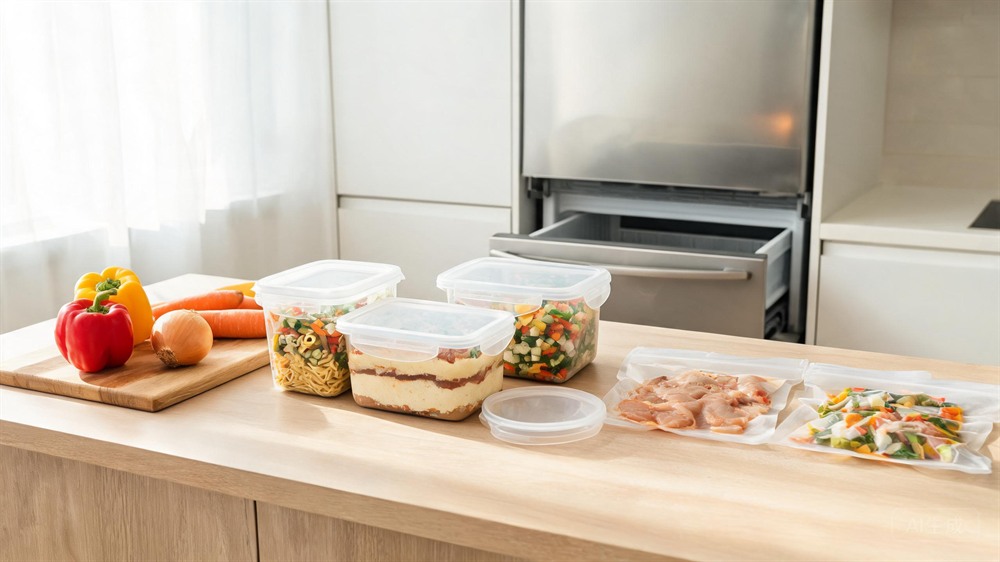
Good containers quietly decide whether your efforts feel satisfying or frustrating. Airtight tubs, sturdy bags, and oven‑safe dishes protect flavor and texture far better than random leftover boxes. Flat freezer bags are ideal for soups and sauces because they freeze quickly and file neatly like books in a small bin. Rigid containers are useful for liquids that might leak and for meals that will be reheated in the microwave.
Smaller, shallow dishes are surprisingly powerful. They cool faster, freeze more evenly, and reheat more predictably than deep, heavy pans. For households with fewer people at the table, two small trays beat one giant one almost every time. Disposable tins can be handy for gifting meals or for chaos‑heavy seasons when easy cleanup is the priority.
Portioning food to match patterns in your home
Portion planning is less about strict measurements and more about paying attention to how your household eats. If leftovers often sit untouched, your freezer portions are probably too large. Aim for a mix: family‑style containers for shared dinners, plus a few smaller ones for solo meals, packed lunches, and late‑night snacks. Over time, you will recognize what actually gets finished in one sitting.
Children, older adults, and people recovering from illness frequently need different amounts than everyone else. Labelling containers with both the dish name and a quick note like “serves one” or “serves two” makes it easier to grab the right size. This reduces waste and helps avoid that slightly guilty feeling when a half‑eaten tray ends up forgotten.
Simple labeling and layout that keep the freezer friendly
Labels turn a packed drawer into a friendly menu rather than a guessing game. A piece of tape and a marker are enough. Include the dish name, a rough portion size, and brief reheating notes such as “bake from frozen” or “thaw overnight, then heat on stove.” That tiny effort means anyone in the house can handle dinner, not just the person who did the prep.
A little structure inside the freezer also makes a big difference. Group similar items together—soups in one stack, bakes in another, breakfast items in a corner. Many people like to keep a small “use soon” area near the front. Glancing in once a week and nudging older meals forward prevents forgotten ice‑covered blocks at the back. It doesn’t have to be perfect; just enough order that you can see your options quickly.
Turning Frozen Dishes into Relaxed Family Meals
Thawing and reheating with confidence
The most relaxed way to use what you’ve made is to move a container from freezer to fridge in the morning. By dinner, it usually needs only gentle reheating in the oven or on the stove. Stirring occasionally, adding a splash of water or stock if things seem thick, and checking that the centre is fully hot are usually all that’s needed.
When you forget to plan ahead, smaller or flatter portions are your friends. Bags of soup, sauces, or marinated meats can be loosened under cool water, then tipped into a pan or onto a tray. Covering the pan for the first part of heating helps defrost evenly before you uncover to let things bubble or brown. Pies and bakes straight from the freezer simply need extra oven time and, if the top is browning fast, a loose sheet of foil.
Adding small, fresh touches so meals feel special
Even the simplest prepped dinner can feel bright and new with a few quick additions. A green salad, cut fruit, sliced cucumber, or steamed vegetables come together in the time it takes a bake to finish in the oven. Herbs scattered on top, a citrus squeeze, or a spoon of yoghurt or pesto instantly lightens rich flavors.
Texture matters too. Toasted nuts or seeds, crispy onions, croutons, or grated cheese added at the last minute keep reheated stews and soups interesting. Serving the same base with rice one night, noodles the next, and bread another time makes it feel like three different meals instead of one repeated dish. These little changes stop freezer dinners from feeling monotonous.
Making it work for children and changing routines
Households with children or shifting schedules benefit from flexibility. Smaller containers of kid‑friendly options—pasta with mild sauce, meatballs, hand‑held wraps or burritos—can be thawed or reheated quickly for early bedtimes, after‑practice hunger, or fussy evenings. Serving toppings “bar style” lets children customize plates with cheese, vegetables, or sauces, which often encourages better eating.
Over time, patterns appear. Some meals vanish fast; others linger. Use that as quiet feedback, not a judgment. Cook more of the hits, retire what drags, and keep experimenting gently with one new idea at a time. The real success is not a perfectly labeled, color‑coded system, but a freezer that quietly supports your days: fewer frantic scrambles, more predictable dinners, and a kitchen that feels like it’s on your side.
Q&A
- How can Simple Freezer Meal Planning reduce weeknight stress for busy families?
By planning 3–5 freezer meals around your busiest days, you cut daily decision-making, shop more efficiently, and always have a backup dinner ready, which reduces takeout reliance and evening chaos.
- What are the core principles of Batch Cooking Basics for beginners?
Start with 1–2 proteins, cook them in bulk, then portion into different flavor profiles, cool quickly, label clearly, and freeze flat so you build variety without spending all day in the kitchen.
- How does Family Dinner Prep change when you rely on Make Ahead Meal Ideas?
You shift effort to a single prep session, pre-chop veg, pre-cook grains, assemble casseroles or marinated meats, so on busy nights you mainly reheat, toss a salad, and serve.
- What are some top Freezer Friendly Ingredients to always keep on hand?
Cooked rice and pasta, shredded cheese, ground meat, chicken thighs, beans, stock, frozen veg, tortillas, and bread all freeze well and can be quickly turned into soups, bakes, or skillets.
- How does Weekly Kitchen Organization support Time Saving Home Cooking with freezer meals?
A weekly reset—clearing the fridge, rotating freezer stock, updating a meal list, and grouping ingredients by meal—lets you see what’s ready, prevents waste, and speeds up every cooking session.