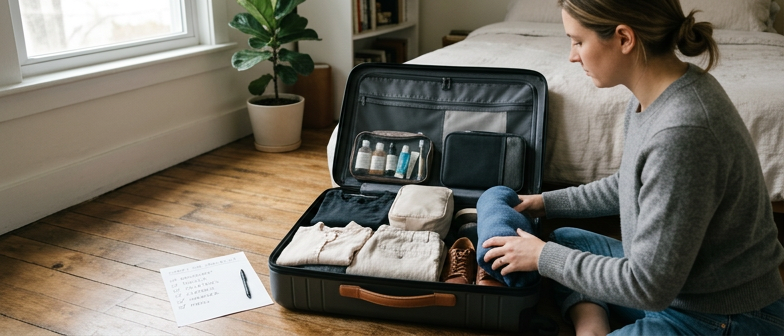
Why a Carry-On Packing Checklist Matters
Using a structured Carry On Packing Checklist turns packing into a predictable routine instead of a last-minute scramble. By following a simple plan that highlights compact travel essentials such as clothing layers, chargers, and size-compliant toiletries, you avoid overstuffing your bag and reduce the risk of gate checks, extra fees, or slow boarding. A clear list keeps medications, a spare outfit, and comfort items in one organized place so you can reach them quickly during the flight.
A thoughtful checklist also makes Airport Security Packing smoother. When you decide in advance where liquids, electronics, and other inspected items will go, you spend less time rearranging your carry-on in the security line and lower the chance of delays or additional screening. Organizing what you pack around how and when you will use it keeps travel documents, identification, and other essentials easy to grab without digging through everything. Over time, this repeatable system can be adjusted for different trips, so each journey feels more efficient and less chaotic.
Organizing Travel Documents and Personal Items
A well-organized travel document setup keeps your carry on packing checklist easy to follow and reduces stress at the airport. Keep your passport, driver’s license, boarding passes, and visas together in a slim travel document organizer that fits inside your personal item. Store documents in the order you will need them, with ID and boarding pass in front and less frequently used papers, like hotel confirmations, behind them. Use labeled pockets or color-coded sleeves so you can quickly hand over whatever security or gate agents request without shuffling through loose papers. Keep digital copies securely on your phone or in the cloud as backups, but do not rely on them when physical documents are required.
A practical personal item packing guide also focuses on how you arrange essentials for airport security packing. Keep your wallet, phone, medication, and small electronics in dedicated compartments so they are easy to remove during screening. Pack liquids, gels, and aerosols that must follow airline and security rules together in a clear, resealable bag near the top of your bag so you can pull it out quickly. Avoid overstuffing your personal item, since bulging pockets and tangled cords slow you down and attract extra attention. By grouping documents and personal belongings by purpose and how often you use them in flight, you move through the line more smoothly and keep everything secure yet accessible.
| Item Category | Specific Items to Confirm | Access Priority | Security Note |
|---|---|---|---|
| Core ID and boarding | Passport, driver’s license, boarding pass | Highest | Keep together in front pocket |
| Travel paperwork | Visas, itinerary, hotel confirmations | Medium | Store behind primary ID |
| Payment and phone | Wallet, credit cards, smartphone | High | Place in quick-access compartment |
| Health and medication | Prescription meds, basic health items | High | Keep original labels visible |
| Electronics for screening | Small electronics, chargers, earbuds | Medium | Group in one removable pouch |
| Liquids and gels | Toiletries in clear resealable bag | Medium | Pack near top for inspection |
Building a Simple Travel Document Organizer
A simple travel document organizer keeps your key papers in one place so you move through airport security with less stress. Use a slim pouch or wallet in your carry-on or personal item and reserve it for passports, driver’s licenses, boarding passes, and any required visas. Add printed copies of your itinerary, hotel confirmations, and transport details so you are not relying only on your phone. Keep this organizer in an easy-access pocket, away from loose items, so you can grab it quickly during check-in and screening.
Create digital backups to support your airport security packing. Take clear photos or scans of your ID, tickets, and major confirmations, then store them in a secure cloud folder or password-protected notes app available offline. Label files in a way that is easy to recognize under time pressure, and test that you can open them on at least one device before you leave.
Packing Compact Travel Essentials
When you build a compact travel essentials kit for your carry-on, focus on what you will actually use during the flight and on your first day. A practical carry on packing checklist for clothing includes one change of lightweight, wrinkle-resistant clothes, spare underwear and socks, and a thin sweater or scarf for changing cabin temperatures. Choose neutral pieces that mix and match with items in your main bag, and roll them tightly to save space. For a short weekend trip packing list where you rely on just a carry-on, let each item earn its place by serving more than one purpose.
Toiletries and personal care items belong in a clear, resealable bag that follows airline liquid rules, usually limiting container size at security. Travel-size toothpaste, a toothbrush, deodorant, facial wipes, moisturizer, and lip balm cover basic comfort without crowding your carry-on. Keep medications in their original containers so they stay accessible and are less likely to be misplaced. A small health kit with adhesive bandages and simple over-the-counter remedies can be helpful, but avoid restricted or hazardous products and review airline and government guidance before you fly.
Electronics and small necessities complete a streamlined cabin bag. Keep your phone, headphones, charging cables, and a small power bank easy to reach so you can remove them quickly if security asks. A compact pouch for pens, a sleep mask, earplugs, and a lightweight reusable water bottle keeps comfort items organized without adding bulk. Store important travel documents, your wallet, and keys in a separate zippered section so they do not disappear among other gear, making your carry-on easier to use from business flights to spontaneous weekend getaways.
Weekend Trip Packing List for Your Carry-On
For a short weekend getaway with only a carry-on and a personal item, focus on compact travel essentials you know you will use. Choose one small rolling bag or backpack as your main carry-on, and reserve your personal item, such as a tote or slim laptop bag, for valuables and in-flight needs. Pack two or three mix-and-match outfits in lightweight, wrinkle-resistant fabrics, one extra pair of comfortable shoes if needed, and a light layer like a cardigan or thin jacket that you can wear on the plane to save space.
Use your personal item as a small organizer to keep your weekend trip packing list simple. Place your wallet, phone, keys, travel documents, and any medications in easy-to-reach pockets, and add a pouch with travel-size toiletries that meet airline liquid rules. Include a reusable water bottle to fill after security, a compact toiletry kit with basics, and modest comfort items for the flight such as lip balm, an eye mask, or a light scarf so you can travel light without feeling unprepared.
Preparing for Airport Security and Safety Rules
Thoughtful airport security packing keeps your carry-on easy to screen and supports a smooth checkpoint experience. In your Carry On Packing Checklist, place laptops, tablets, and large cameras where they can be removed quickly, ideally in outer pockets. Group small electronics such as chargers, power banks, and travel-size medical devices in a single pouch so you can place them in a bin if asked. To give security staff a clear X-ray view, avoid stacking books, metal accessories, and cords in dense layers that look cluttered on the scanner.
Most security rules focus on liquids, gels, and aerosols, so plan these before closing your bag. Follow the common limit for liquids by using small containers packed together in one transparent, resealable bag and keep only essential toiletries in your cabin luggage. Put larger bottles in checked baggage and remove drinks or oversized liquid items before reaching the front of the line to avoid having them discarded. Keep medications in original packaging when possible and store them near your travel document organizer so you can present them easily and answer questions if needed.
Safety rules also cover hazardous materials and restricted items that should not be in your compact travel essentials. Many batteries, flammable products, tools, and pieces of sporting gear have specific rules, so review airline and transport authority guidance and adjust your Weekend Trip Packing List accordingly. Place allowed lithium batteries and power banks in your carry-on, with switches protected from accidental activation, and leave clearly prohibited items such as certain sharp tools or self-defense sprays at home. By aligning your packing checklist with current security regulations, you move through screening more quickly and start your flight with less stress.
Q&A
-
How does a carry-on packing checklist help when you fly?
It turns packing into a quick routine, keeps essentials like a spare outfit and medications in your bag, and lowers the chance of overpacking, extra fees, or last‑minute gate checks. -
How should I store travel documents in my personal item?
Use a slim organizer with separate slots. Put your ID and boarding pass up front, other papers behind, then keep the organizer in an outer pocket you can reach at check‑in and security. -
What makes a simple travel document organizer useful?
It keeps passports, licenses, boarding passes, visas, and printed confirmations together in a flat pouch that slips into your bag, opens easily, and lets staff see everything at once. -
What compact essentials should always go in a carry-on bag?
Pack one change of clothes, socks and underwear, small toiletries within liquid limits, a light layer, key chargers, and any daily medications or small comfort items you rely on. -
How can I pack for smoother airport security screening?
Keep laptops and tablets near the top, small electronics in one pouch, follow liquid size rules, and avoid tight stacks of books or cords so the X‑ray image stays clear and bins move faster.