Why Bread Stales and Spoils
Bread begins to change as soon as it cools after baking, which is why storage affects its shelf life. As the loaf cools, gelatinized starches realign and harden, a process called starch retrogradation. This makes the crumb feel drier and firmer even when much of the moisture is still present. Air movement and low humidity speed up drying, especially for sliced bread with more exposed surfaces. Temperature also matters, because cool conditions in a refrigerator can cause starch crystals to form more quickly than they would in a dry, shaded pantry, so chilled bread often tastes stale sooner.
Spoilage is driven mainly by microbes that come from the flour, air, or equipment. Mold develops fastest when bread is slightly moist, enclosed, and kept at moderate room temperatures. Some commercial loaves contain preservatives that slow this growth, while homemade bread without these additives usually keeps for a shorter time. Any bread storage method has to balance staling and mold: a sealed bag or bread box can help keep the crumb soft yet trap moisture that favors mold, while looser storage keeps the crust crisp but lets the interior dry out more quickly. Understanding this trade‑off helps in choosing a storage container based on how soon the loaf will be eaten.
Room-Temperature Bread Storage Basics
Storing bread at room temperature works best when air, light, and heat are limited. Bread keeps its texture longer when it is shielded from drafts and direct sun but can still breathe a little. A bread box, paper bag, or loosely closed bread bag helps reduce drying without fully sealing in moisture. Keeping bread in a cool, dry area of the kitchen, away from appliances that give off heat or steam, slows both staling and mold growth, though it does not prevent either completely.
Bread shelf life at room temperature depends on ingredients and how it was baked. A standard sliced loaf with preservatives may stay soft for several days if the package is closed after each use and handled with clean, dry hands. A crusty artisan or homemade loaf without preservatives usually tastes best within a day or two, then gradually firms up, especially once sliced. Even when it becomes drier, it may still be safe to eat if there is no visible mold or off smell, although the eating quality declines.
There is always a balance between keeping the interior soft and limiting mold risk. Tightly sealing bread retains moisture and softness but can encourage mold in warm or humid conditions. Allowing more airflow keeps the surface drier and may slow mold, but the crumb stales faster. The best storage choice depends on how quickly a household finishes a loaf, the local climate, and texture preferences, and bread should be checked regularly and discarded if there is any sign of spoilage.
| Storage option | Freshness over time | Mold risk | Convenience |
|---|---|---|---|
| Plastic bread bag loosely closed | High for short term | Medium to high in warm rooms | High, uses original packaging |
| Paper bag on counter | Medium for crusty loaves | Medium, surface stays drier | High, easy to open and close |
| Bread box | Medium to high, balanced moisture | Medium, limits light and drafts | Medium, needs counter space |
| Uncovered on cutting board | Low, stales quickly | Low if kitchen is dry | High, no packaging steps |
Choosing and Using a Bread Box
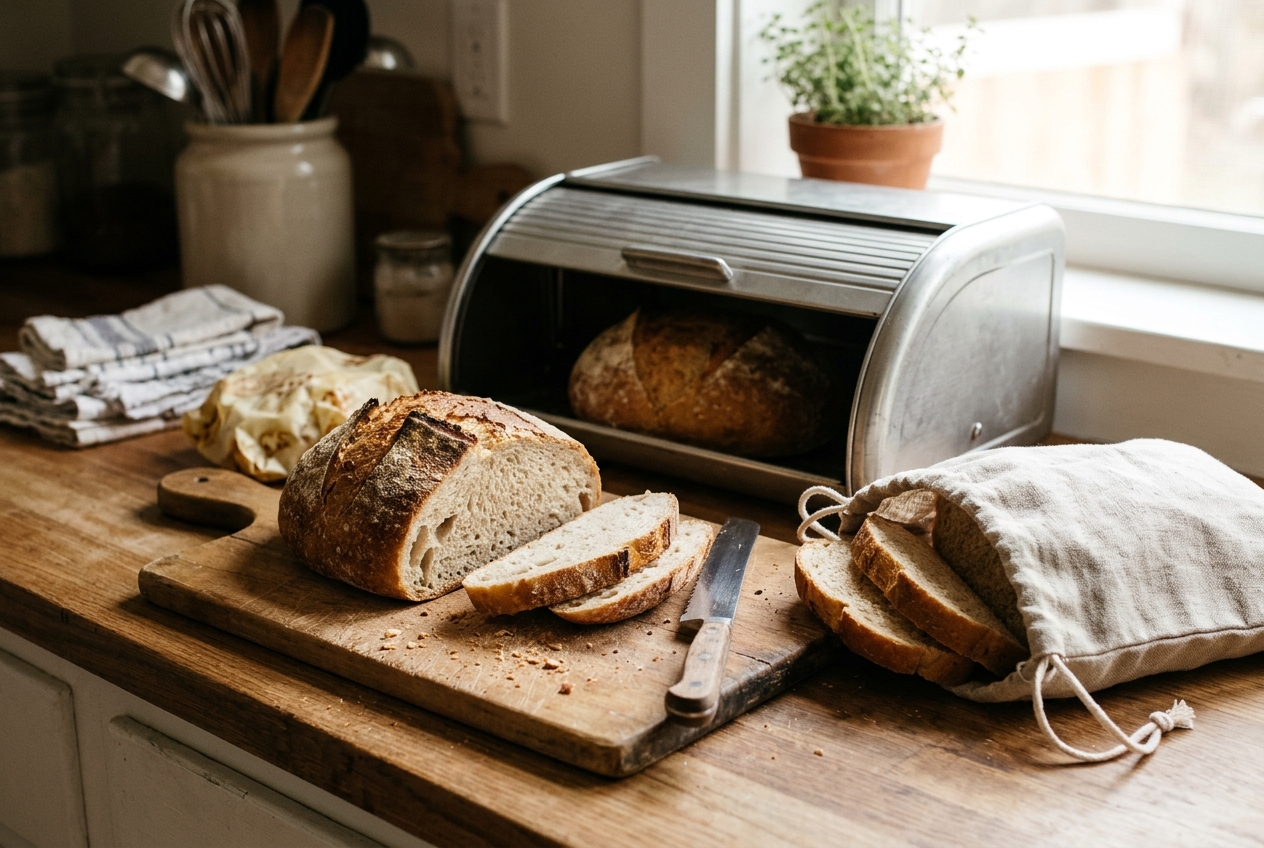
A bread box is a storage container that slows staling by balancing airflow and humidity around the loaf. It offers more ventilation than sealed plastic, which can trap moisture and promote mold, yet protects bread better than leaving it fully exposed. Choose a box that fits the loaves you usually buy or bake, with a lid that closes securely without being airtight. Wood, metal, and sturdy plastic work similarly, so size, counter space, and ease of daily use are the main considerations.
To use a bread storage container effectively, keep it in a cool, dry place away from sunlight and heat sources, which can shorten bread shelf life. Let homemade or freshly baked bread cool completely so steam does not condense inside. Remove crumbs often and wash the interior with mild soap when needed, letting it dry fully before refilling. If bread still molds quickly, check for very humid kitchen conditions and consider freezing part of the loaf.
Refrigeration and Freezing Bread
Refrigeration can be confusing for bread storage because it slows mold but speeds up staling. Cool temperatures in a household fridge cause starch in the crumb to realign and firm up, so bread may feel dry or chewy within a day or two. This is most obvious with fresh bakery and homemade loaves that lack preservatives. When bread will be eaten within a couple of days, a bread box or sealed container at room temperature usually keeps the texture softer than placing the loaf in the refrigerator.
There are situations where chilling bread is still useful despite a drier crumb. In very hot or humid kitchens, or when a loaf must sit for several days, refrigeration can lower the risk of visible mold before it is finished. Pre sliced sandwich bread sold in bags tends to handle cold storage better than crusty artisan bread, although slices often become firmer. If refrigerated bread seems stale, gently reheating it in a toaster or warm oven can temporarily soften the interior, but the original freshness will not fully return.
Freezing bread is generally the most effective way to extend bread shelf life while preserving quality. Wrap a loaf or slices tightly in plastic or place them in a freezer safe storage container, pressing out excess air to reduce freezer burn. Frozen bread can usually be kept for several weeks to a few months before flavor and texture noticeably fade. When needed, thaw slices at room temperature, toast them straight from the freezer, or rewarm a whole loaf in a low oven to retain more of the original crumb and crust.
Step-by-Step Guide to Freezing Bread
For best results, let bread cool completely, then slice it so you can take only what you need later. Wrap slices or sections tightly, pressing out air, and place them in a labeled freezer bag or bread storage container with the date noted.
When you need bread, remove only the required pieces to avoid repeated thawing. For room-temperature use, keep them wrapped until fully thawed. For a crisper bite, toast slices straight from frozen or warm them briefly in an oven. Bread usually keeps good quality in a typical home freezer for several weeks, though flavor and texture slowly decline.
Storing Homemade Bread versus Store-Bought Loaves
Homemade bread and commercial loaves age differently because they are made and packaged in different ways, so they benefit from different storage habits. A typical homemade loaf is often baked with a short list of ingredients and little or no added preservatives, which means it usually has a shorter shelf life but a fresher texture for the first day or two. Leaving a homemade loaf loosely wrapped at room temperature in a bread box, paper bag, or breathable cloth can help keep the crust from becoming tough while limiting excess moisture that encourages mold. Cutting only what you need, storing the loaf cut side down, and avoiding the refrigerator for everyday storage can slow staling without trapping so much humidity that the bread spoils quickly.
Commercial sandwich bread is usually designed for convenience and longer storage, often using dough conditioners and sealed plastic packaging that keep the crumb soft for more days. For a store-bought loaf, keeping it in its original bag at room temperature and closing the bag tightly after each use is usually enough, as long as the room is cool, dry, and away from direct sunlight. If you will not finish either homemade or packaged bread within a few days, freezing slices or portions in airtight bags or containers can extend practical shelf life while maintaining quality; pieces can be toasted straight from the freezer, though texture may not match freshly baked bread. In all cases, if bread develops an off smell, visible mold, or an unusually sticky surface, it is safer to discard it.
Q&A
-
Why can bread feel dry even when it still has moisture?
As bread cools, its starches recrystallize, a process called starch retrogradation, which firms the crumb and makes it seem dry even though much of the water stays in the loaf. -
How should bread be kept at room temperature?
Keep it in a cool, dry place, out of sun and heat, in a bread box, paper bag, or loosely closed plastic bag so air can circulate and drafts are reduced. -
What does a bread box do for a loaf?
A bread box balances airflow and humidity, limiting drying air currents while avoiding the trapped moisture and condensation that often appear in tightly sealed containers. -
Is refrigeration or freezing better for bread you will eat later?
Freezing is usually preferred for longer storage because it pauses staling, while typical refrigerator temperatures slow mold growth but make bread firm and stale faster. -
How can homemade bread be frozen for later?
Let the loaf cool, slice it, wrap the slices tightly with most air removed, then place them in a labeled freezer bag or other suitable bread storage container.